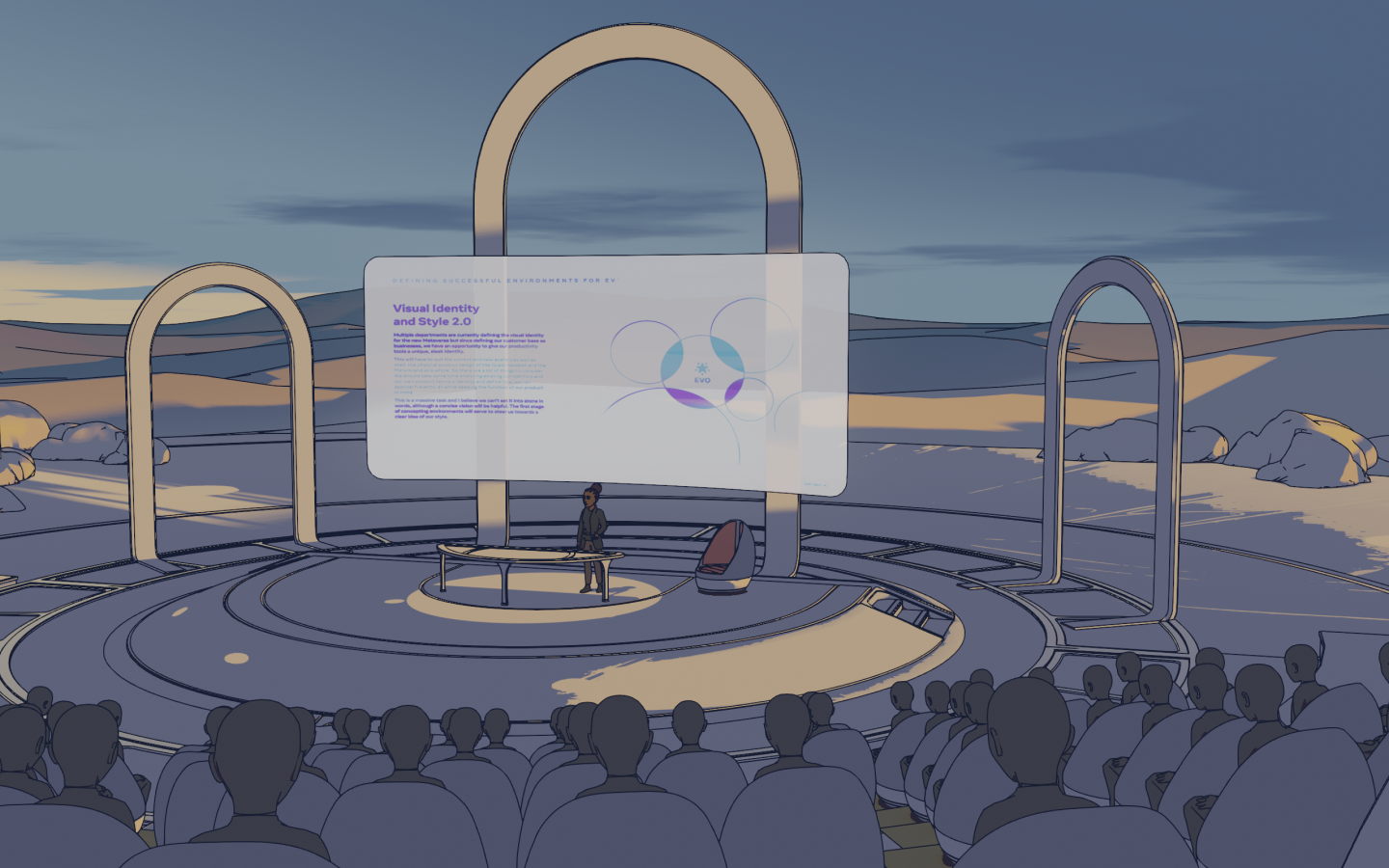
Reinventing work events in VR
A product vision for running real work events in VR. I designed the audience and presenter experiences, including the 2D tooling a host uses to set up and run the whole event.
A high-level look at the work, presented in full on request.
How this came about
This started with a pivot. I was designing Workplace, Meta's enterprise intranet, when the business moved into the metaverse and our team's roadmap moved with it.
Nobody on the team had designed for VR before, me included. I taught myself to design and prototype in the medium, then ran prototyping sessions to upskill the rest of the team as they made the same jump.
The design work started with research that decided where VR adds something real and where 2D should stay.
The work was presented and demoed live to Andrew Bosworth, Meta's CTO, and senior VPs across Reality Labs.
Three early prototypes
This was a completely new product, so we grounded ourselves in research first: the jobs to be done when you attend a virtual event, and when you present one. Those core jobs became the workflows and user journeys the prototypes are built on.
They are early and rough on purpose, built in the headset while I was learning the medium, just to test how flat screens feel inside a 3D environment.
Waiting together
- Conversation happens in your pod while you wait
- Pods are colleagues pre-matched on the people graph
- Ice-breaker moments keep it natural
Going live
- Well lit and free-form while people settle in
- Lights dim at “Go Live” to focus the stage
- The 2D broadcast starts at the same moment
Presenting
- Bring existing slides or share a screen
- Polls and questions engage the room mid-event
- Live reactions from the VR and 2D audience
The 2D redesign
Every VR event still starts on a screen. I redesigned both sides of it: how you attend, and how you create and produce. The befores are Workplace as it stood; the afters sit on a new design system we defined to suit the VR nature of events.
Attending
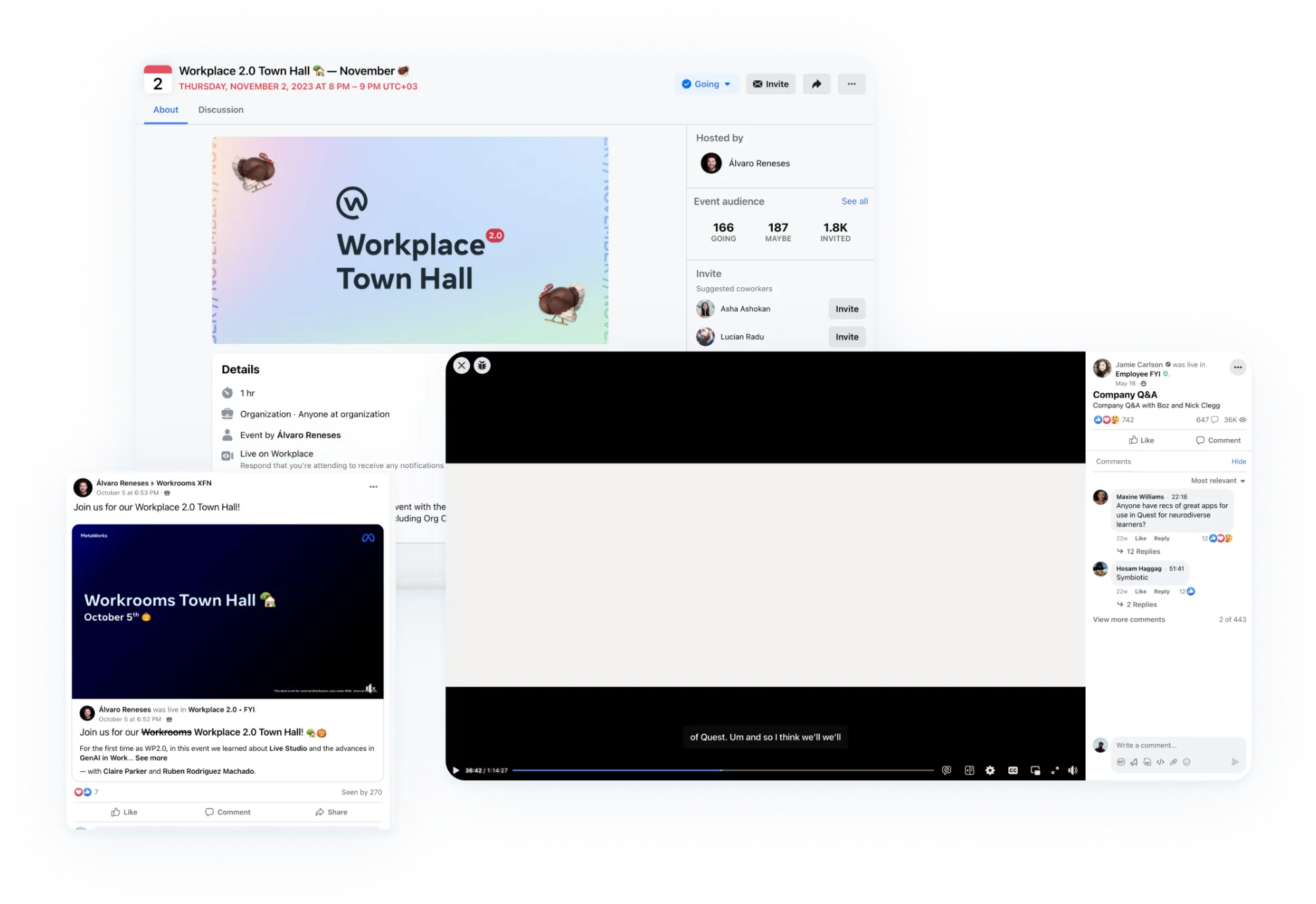
Entry points were scattered across surfaces, and the audience had no home before the event.
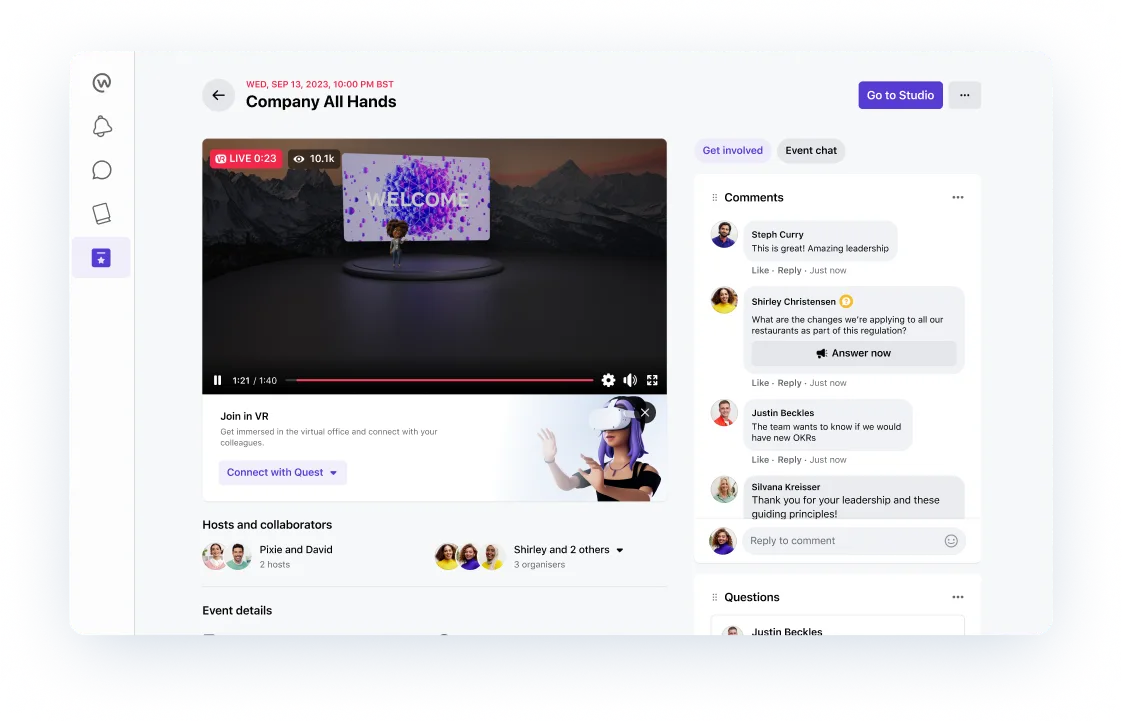
One go-to page: watch in 2D or join in VR, questions and polls in one place, and the recording afterward.
Creating
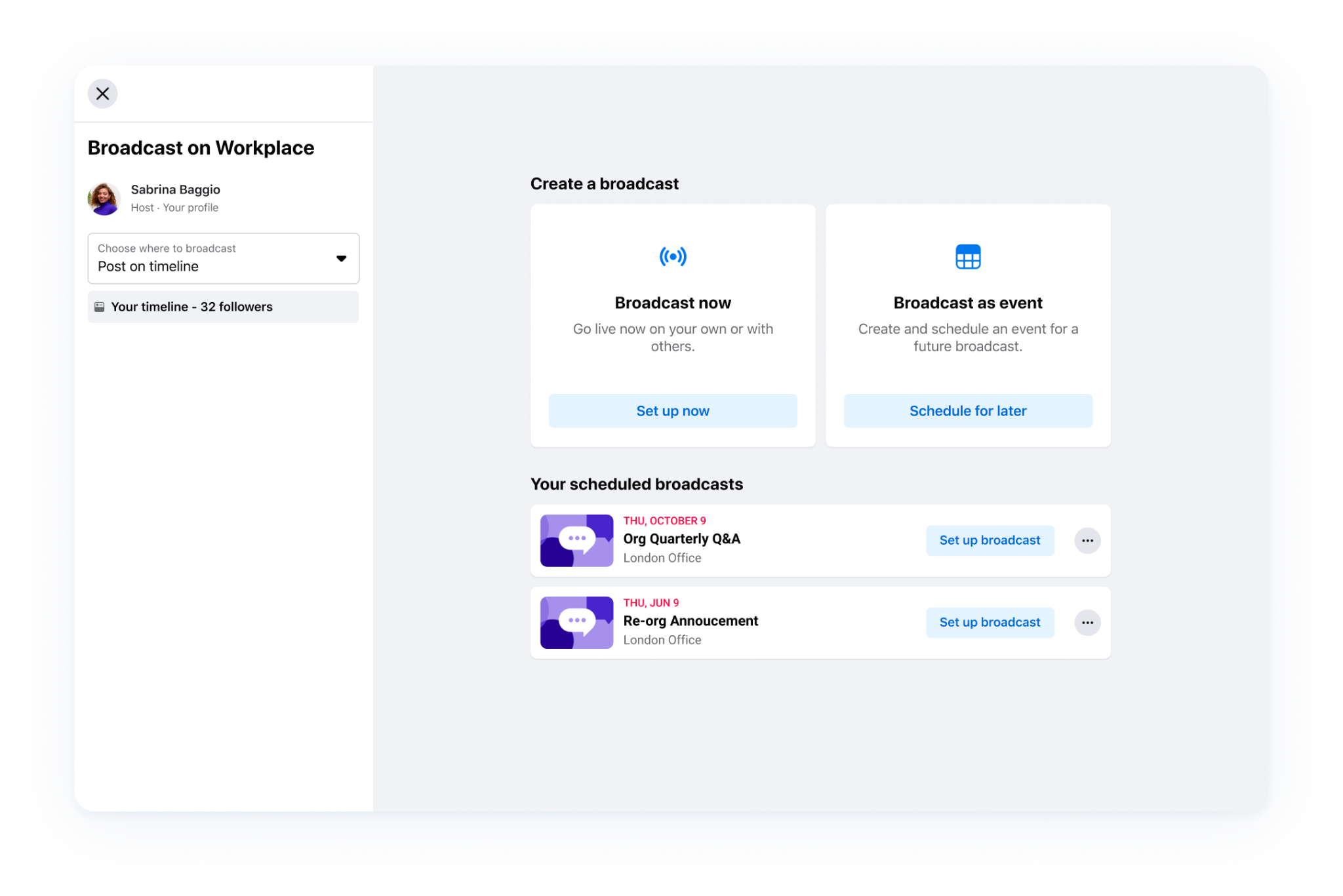
Live and Events sat in separate tools, entry points were hidden, and there was no central place for insights.
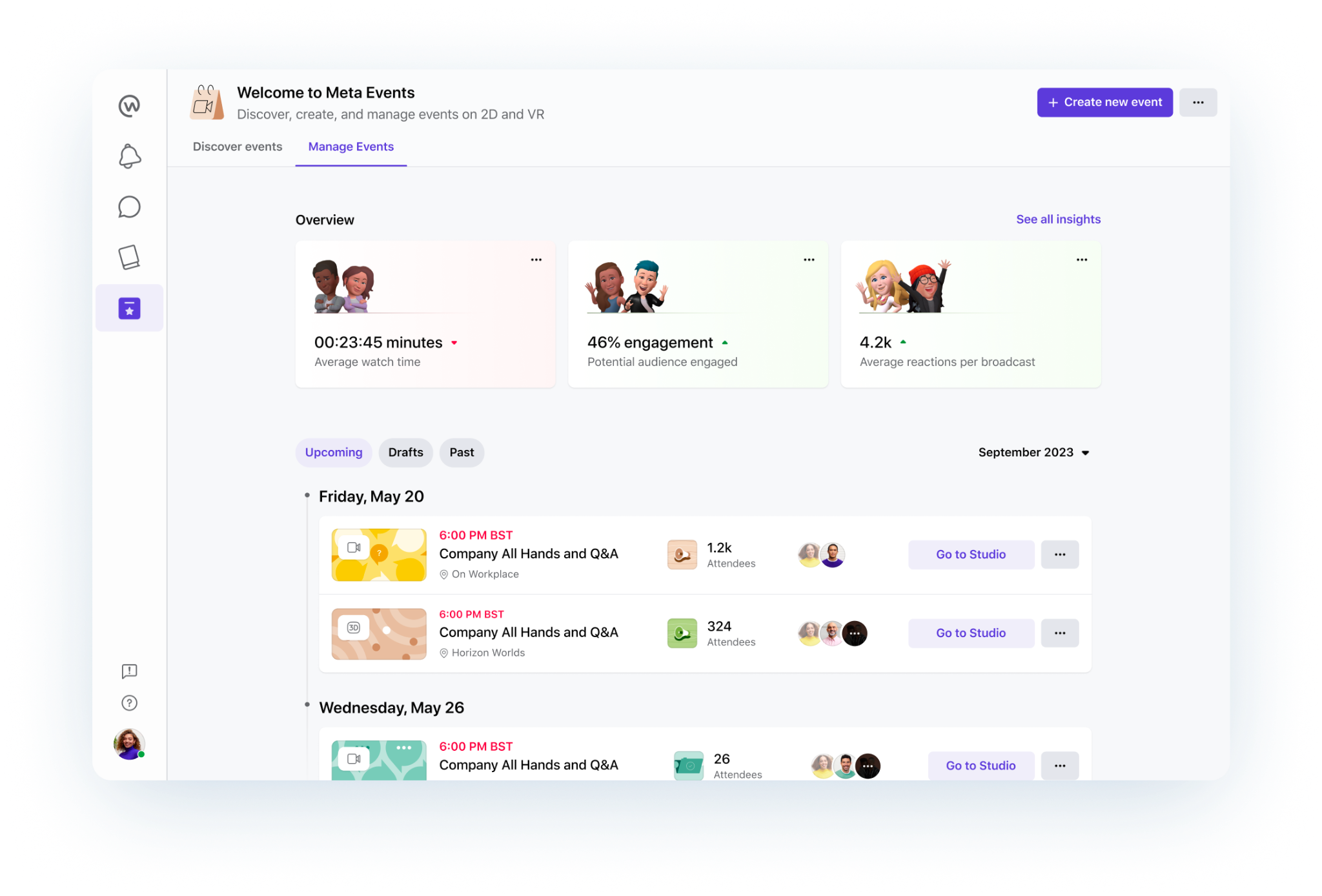
A central surface for 2D, VR or hybrid events, with delegation, collaboration and insights built in.
Producing
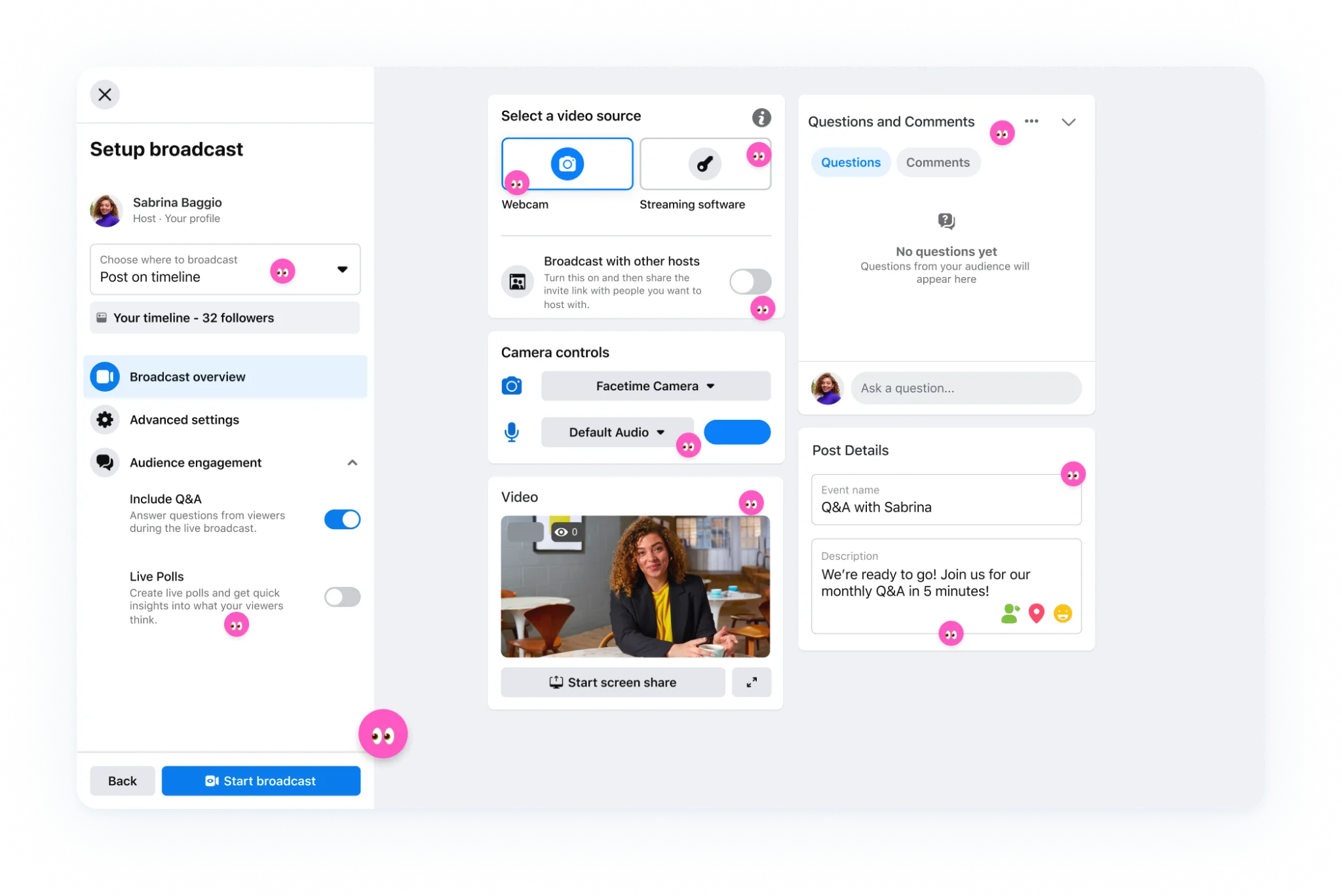
Going live was overwhelming, with no guidance and no support in the moment.
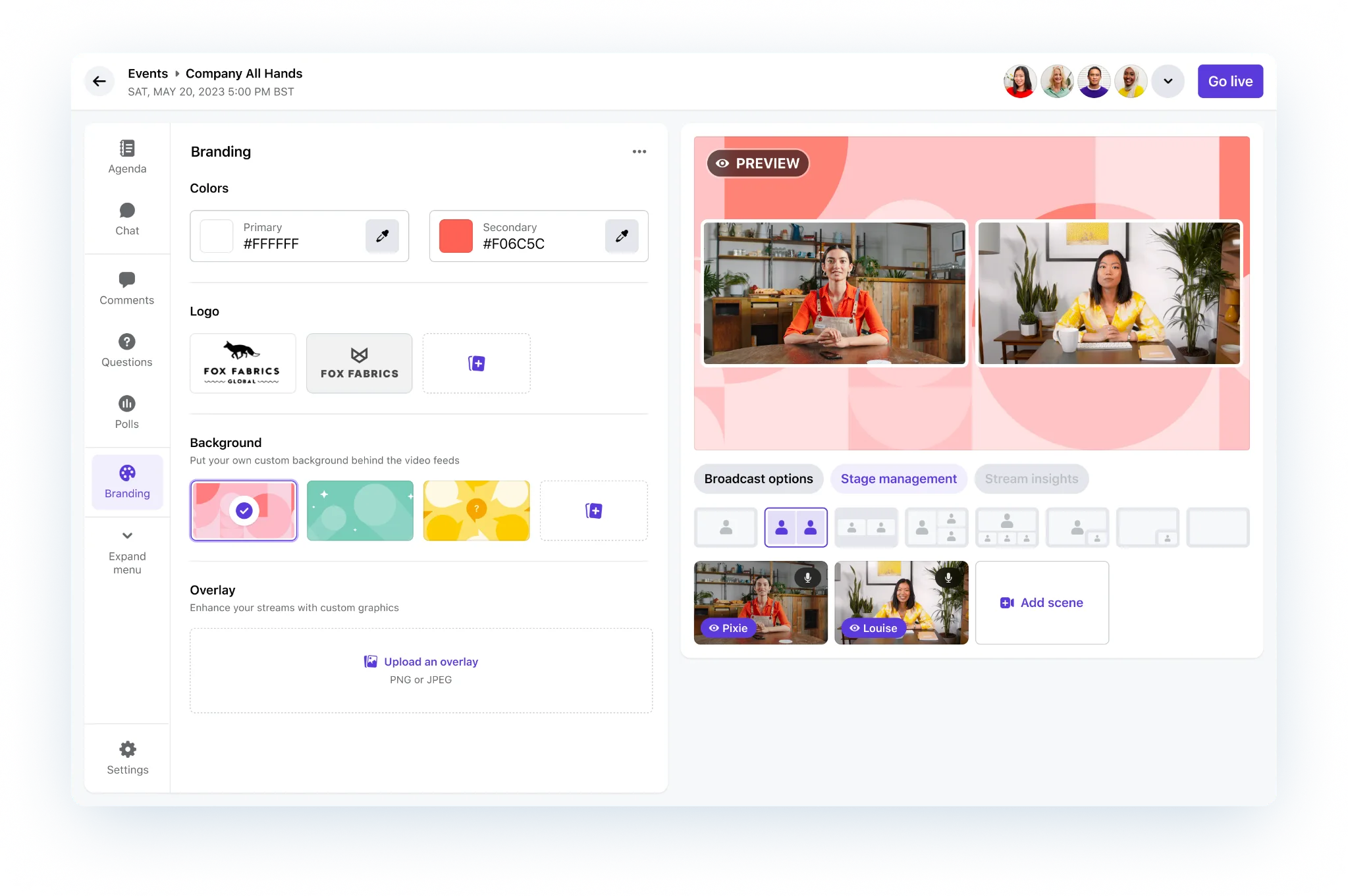
A guided setup, moderators and producers alongside, and full control of layouts, branding and scenes.
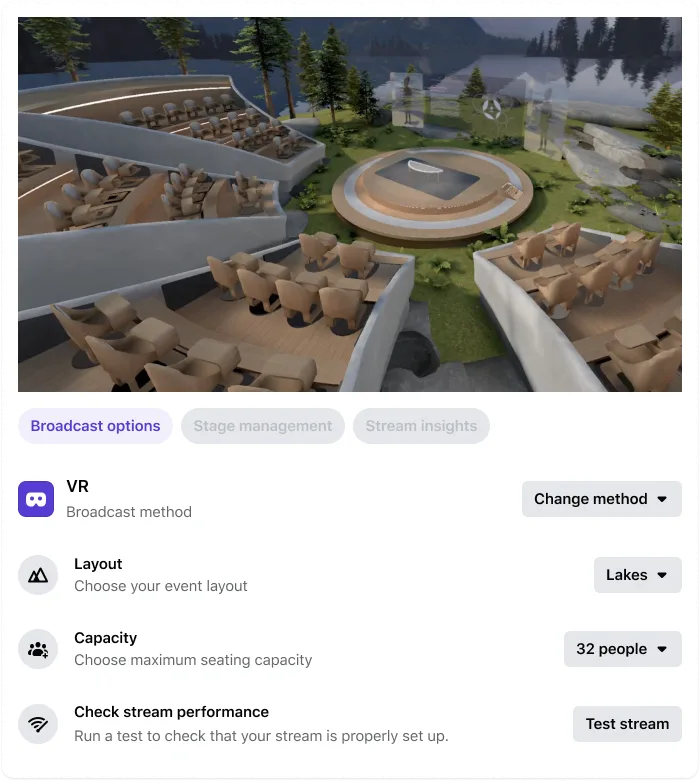
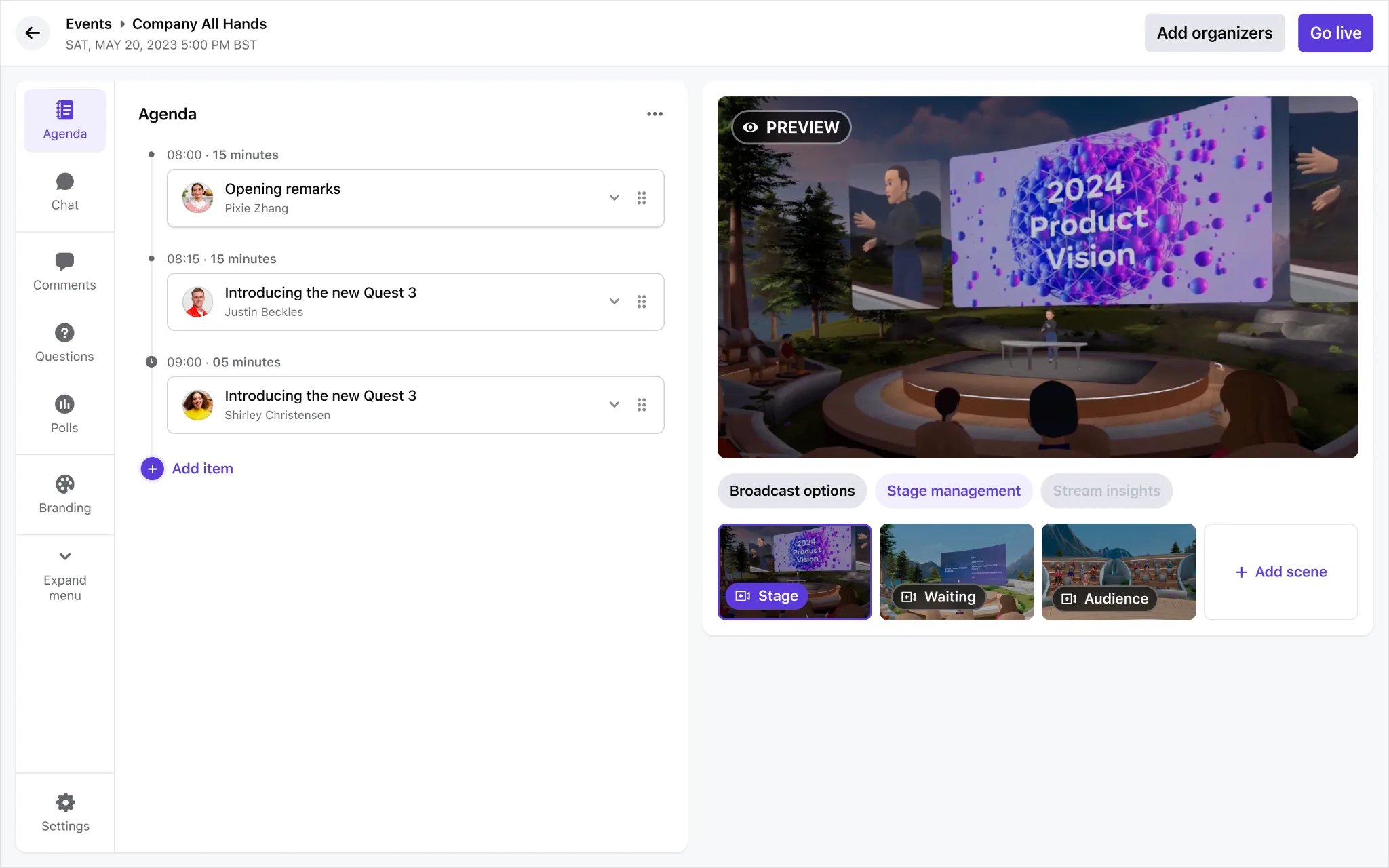
Event Studio: plan the whole event from 2D surfaces organizers already know. Big events take several people to plan, and none of that should happen in a headset.